Daivaradhane (ದೈವಾರಾಧನೆ) is a sacred ritual tradition of Tulu Nadu. It is a unique blend of spirituality, culture, dance, devotion, and centuries of heritage.
The rituals are performed to honor the Daivas and Spirits, protect villages, solve problems, deliver justice, and maintain harmony.
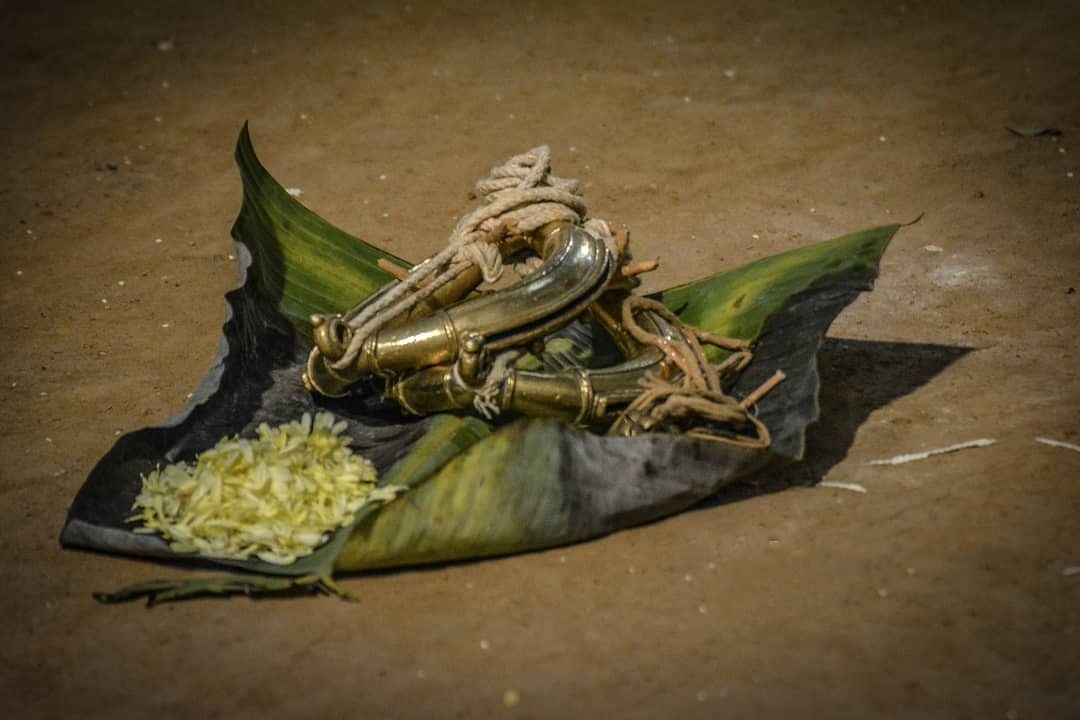
The gaggara is a vital ritual element in the Daivaradhane (spirit worship) tradition of the Tulunadu region, primarily consisting of metal anklets worn by the impersonator who channels the spirit deity (Daiva or Bhoota) during the Kola or Nema ceremonies.
Read More…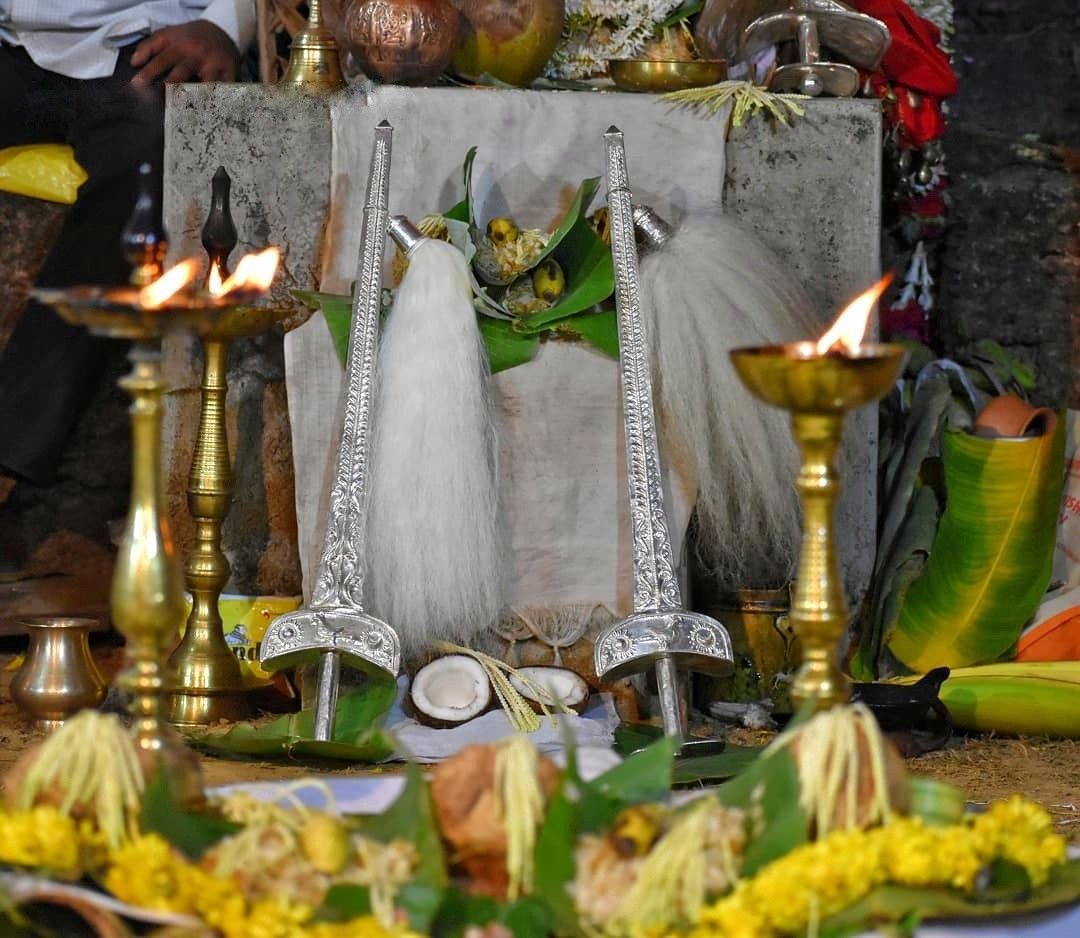
The Kadsale is a significant, sacred, traditional curved sword that serves as an important ritualistic element and divine weapon (ayuddha) in Tulunadu Daivaradhane (Bhoota Kola). It is not just a costume prop but an object with deep spiritual meaning and is treated with utmost respect. Divine Weapon: The kadsale is a primary symbol of the authority and power of the Daiva (spirit or deity) it represents. The deity Jumadi (Dhumavathi), for example, is specifically associated with the kadsale as her weapon.
Read More…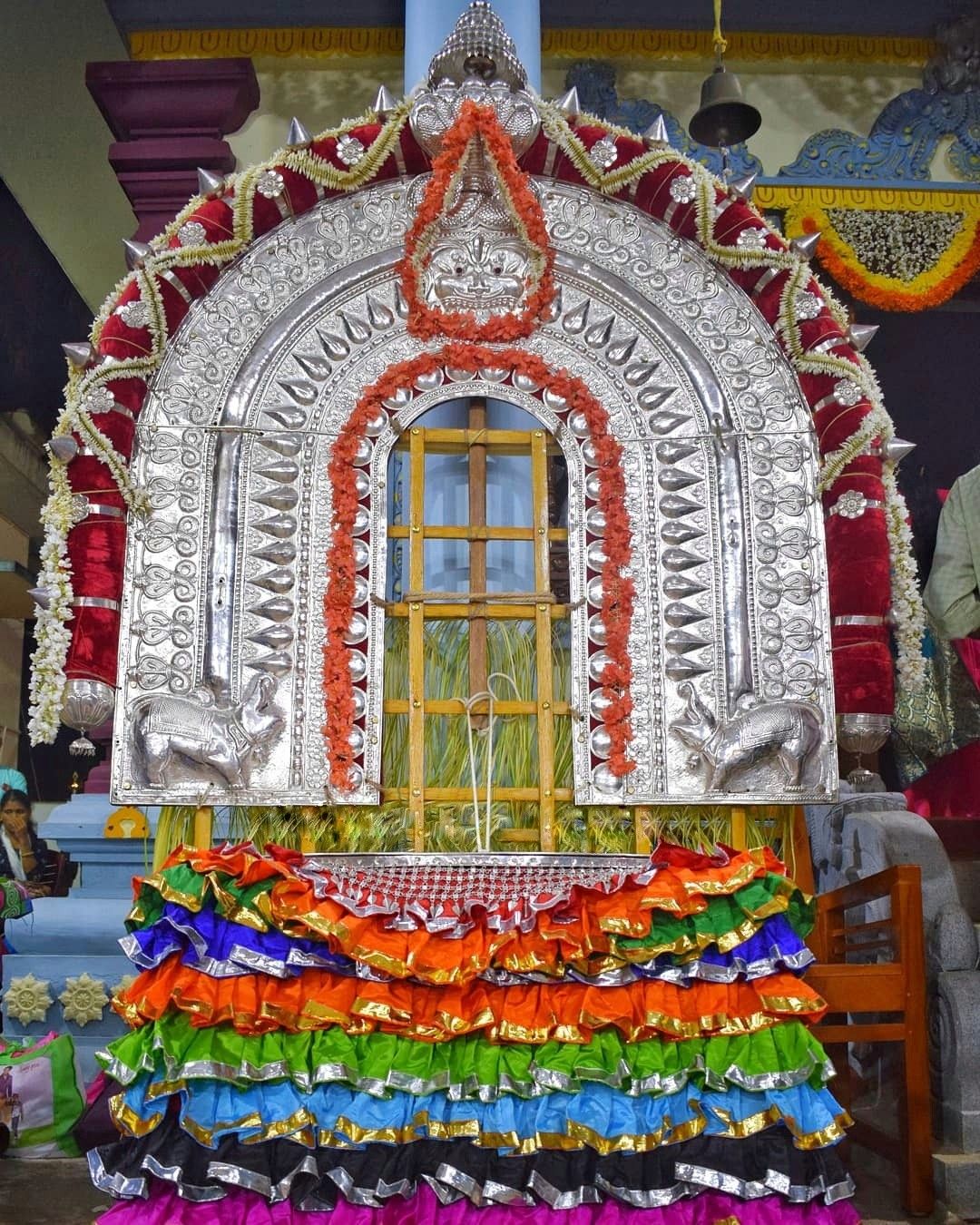
The Ani (halo-like structure) is a vital ritual element in the Daivaradhane (spirit worship) tradition of the Tulunadu region, primarily consisting of intricate Areca palm leaf arrangements worn by the impersonator who channels the spirit deity (Daiva or Bhoota) during the Kola or Nema ceremonies.
Read More…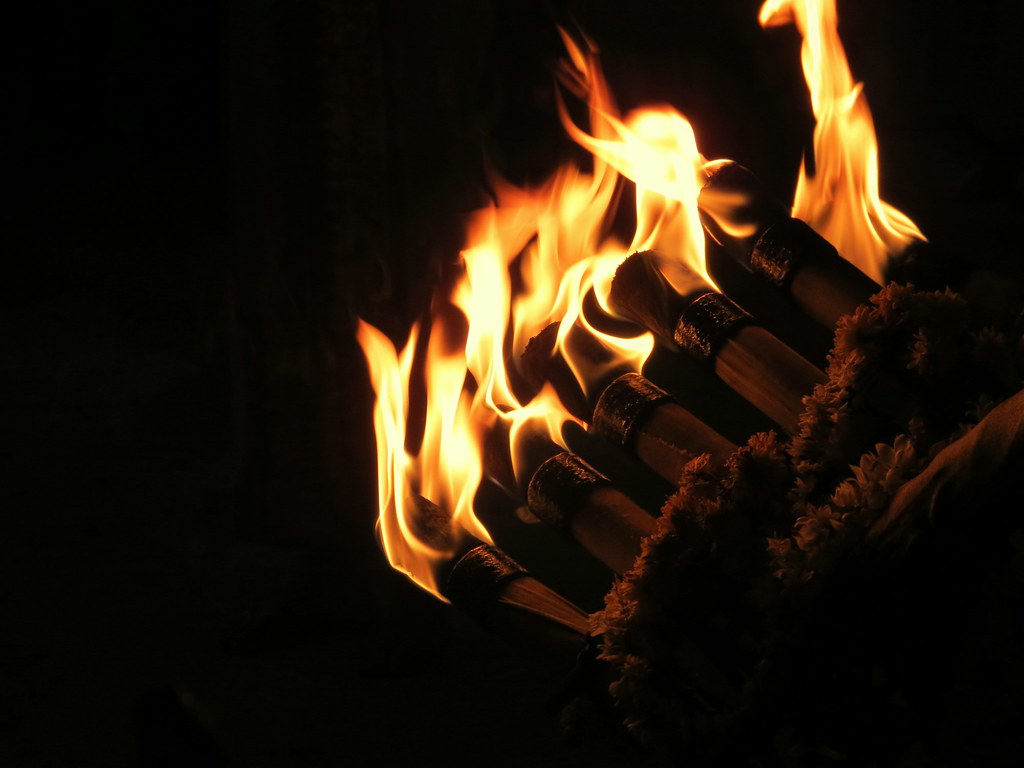
In Tulunadu's Daivaradhane (spirit worship), the Jeetige (or Jeti/Jettige) is the crucial, traditional oil lamp/torch used extensively, especially by the performer (Pātri or Māni) in the fiery Kola performance, symbolizing the deity's presence, offering light for the spirit's manifestation, and creating a sacred, fiery atmosphere for the connection between the physical and divine worlds, often using palm leaves and coconut oil for fuel. It's a core visual and ritual element alongside face painting, elaborate costumes, and music, representing the intense, fiery energy of the Daiva.
Read More…